Por Jorge Inzunza
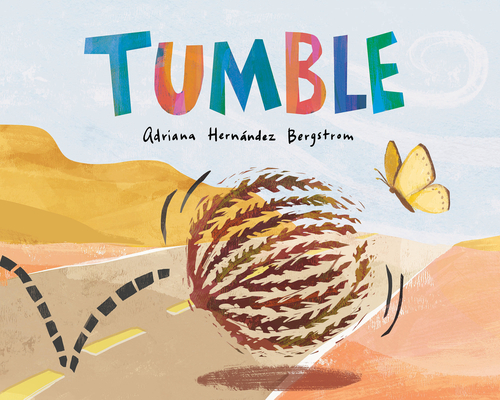
Tumbleweed, or steppicursors, break their roots and set out on a journey across the desert. In Tumble, the initial work of Adriana Hernández Bergstrom, the plant rolls and rolls, encountering various animals, insects and traces of human presence. Adriana illustrates a silent cycle that is carried away by the force of the elements. The rocky dryness of the desert landscape reveals the inhabitants who seem to stop in their movements to observe the reader.
The journey of the tumbleweed is similar to that made by Aida Salazar’s cranes (The Land of the Cranes, 2020). They do not recognize human borders, which are nothing more than administrative inventions. The journey is necessary for the subsistence of the species and the ecological balance.
When exploring the book and seeing images of Texas in its pages, we can also think about the human presence. This is expressed through three elements: the barbed wire, the fences and the road. In the short story The Two Kings and the Two Labyrinths, Borges explores the figure of the desert as the complete absence of human control or interference. Entering the desert is as harrowing as entering the enchanted forests.
The tumbleweed overcomes all these borders and is only trapped in a cactus. The human immigration journey is most sensitive to these limits. Let’s think about the tragic journey of Pulga, Chico and Pequeña in We Are Not From Here, by Jenny Torres Sánchez. The journey through the desert is that of dispossession; it is the wound and it is death. The rain, the butterflies and the ladybugs announce a new rebirth. A new opportunity.
Tumble gives us the opportunity to think about deserts. Inhabit them. Recognize their wonderful diversity and ecology. And at a deeper level, a fear of expansion in the context of continued human predation.
References
- Borges, Jorge Luis (2007). The Two Kings and The Two Laberynths. In Laberrynts: selected stories & other writing. New York: New Directions.
- Hernández Bergstrom, Adriana (2023). Tumble. New York: Orchard Books.
- Salazar, Aida (2020). The Land of Cranes. New York: Scholastic Gold.
- Torres Sánchez, Jenny (). We Are Not from Here. New York: Philomel Books.
El desierto y la naturaleza en diáspora: Tumble de Adriana Hernández Bergstrom
Por Jorge Inzunza
Las plantas corredoras, o estepicursores, rompen sus raíces y emprenden un viaje a través del desierto. En Tumble, la obra iniciática de Adriana Hernández Bergstrom, la planta va rodando y rodando encontrándose con diversos animales, insectos y construcciones humanas. Adriana nos ilustra un ciclo silencioso que se deja llevar por la fuerza de los elementos. La sequedad rocosa del paisaje desértico va descubriendo a los habitantes que parecen detenerse en sus movimientos para observar al lector.
El viaje de la planta corredora es asimilable al que hacen las grullas de Aida Salazar (La tierra de las grullas, 2020). No reconocen las fronteras humanas, que no son más que inventos administrativos. La travesía es necesaria para la subsistencia de las especies y el equilibrio ecológico.
Al recorrer el libro y percibir a Texas en sus páginas, podemos pensar también la presencia humana. Esta se expresa a través de tres elementos: los alambres de púa, las cercas y la carretera. En el cuento Los dos reyes y los dos laberintos, Borges explora la figura del desierto como la ausencia completa de control o interferencia humana. Adentrarse en el desierto es tan desgarrador como la entrada a los bosques encantados.
La planta corredora supera todas estas fronteras y solo queda atrapada en un cactus. El viaje de inmigración humano es más sensible a estos límites. Pensemos en el trágico periplo de Pulga, Chico y Pequeña en No somos de aquí, de Jenny Torres Sánchez. El viaje a través del desierto es el del despojo, es la herida y es la muerte. La lluvia, las mariposas y las mariquitas anuncian un nuevo renacer. Una nueva oportunidad.
Tumble nos otorga la oportunidad de pensar en los desiertos. Habitarlos. Reconocer su maravillosa diversidad y su ecología. Y en un nivel más profundo, un temor a la expansión en contexto de continua depredación humana.


Leave a Reply